
How to Make Resin Coasters or Trays Without Silicone Moulds?
If your creative mind is curious about how to make resin coasters or trays without silicone moulds, you’ve landed in the right place! And after all, why buy ready-made silicone moulds when you can make your own unique design? In this blog, we’ll show you simple and fun ways to skip the store-bought moulds and still craft beautiful resin coasters and trays that perfectly complement your home or workspace.
Whether you make them alone or with your partner, a friend, or a family member, the process is full of joy, creativity, and connection. It’s not just about making resin trays or coasters but about making memories, learning something new, and enjoying those little imperfections that make handmade pieces so special. Let’s get started!
Materials & Tools You’ll Need to Make a Resin Coaster or Tray
Here’s your checklist:
-
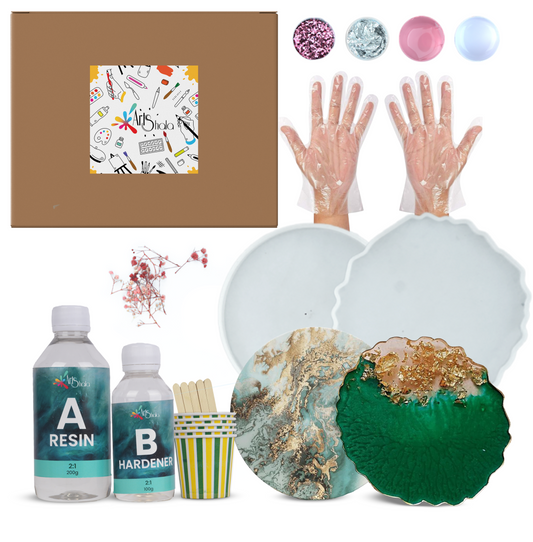
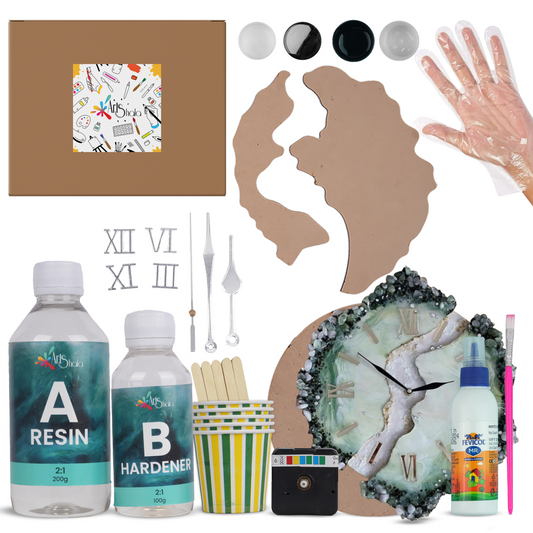
Epoxy resin (very important) and hardener. Choose a brand that’s heat-resistant and easy to use.
-
Mixing cups (plastic disposable ones used for coffee or chai), surface leveller, stir sticks, gloves, respirator or mask. Safety first with safety tools is crucial, as resin fumes can irritate.
-
Alternative mould materials that you’ll be DIYing yourself. Wax or parchment sheet, plastic wrap, aluminium tray, or any wooden frame.
-
Colourants, pigments, mica powder, glitters, and fillers like dried flowers, leaves, coins (fully dry before embedding).
-
Finishing materials like sandpaper (example, 400 grit or finer), cork or felt base for coasters, and acrylic or metallic paint for edges.
-
Prepare a workspace that must be dust-free, level the table, and cover it (for spills) with something like an old newspaper. These things are especially important in Indian homes where dust and insects can settle quickly.
Make sure the mould you choose or make is on a level surface, leak-proof, and allows easy demoulding. If you don’t do that, then you’ll end up getting your beautiful coaster or tray stuck to the mould.
Step-by-Step: Making Resin Coasters or Trays Without Moulds
Now the main mission starts. We are going to make our coasters and tray without moulds step by step:
Prepare Your Workstation
Clear a corner, cover your table with a plastic sheet or craft paper, ensure a window is open or use a fan. As you are making a resin tray or coaster, the level surface matters more than usual. If your tray shape leans, resin may pool. Also, wear gloves and a mask, and keep children or pets away (if there are any).
Create Your Freeform “Mould” or Shape Outline
Here are your options:
-
Option A: Use wax paper on a level tray and draw the shape you want (circle, leaf, hexagon) with a pen or pencil, then use a hot glue gun to build on that outline.
-
Option B: Use a baking tin or shallow aluminium tray, lined with cling-film or plastic wrap to make demoulding easier.
-
Option C: Build a wooden form with scrap planks (say 200×200mm or more for a tray), seal the inside with varnish or tape so the resin doesn’t soak into the wood.
Tip: For a coaster, aim for at least 10 to 12 mm thickness, and for trays, you might go from 20 to 30 mm, depending on size. Seal all seams to avoid resin leaks. Place the form on a precisely level surface.
Mix the Resin & Hardener
Follow the manufacturer’s recommended ratio (often 1:1) to avoid sticky or under-cured resin. Stir slowly, scrape the sides and bottom of the cup. Mix for at least 2 to 5 minutes, depending on the brand, to make sure the mixture is uniform.
Note: In the Indian climate, which is mostly warm and humid, resin can self-heat (exothermic reaction) more quickly. For your first attempt, mix a small batch.
Add Colour / Effects
Decide whether you want a clear base, a coloured one, marbled colour, metallic leaf, or glitter. Add mica powders or pigments (sparingly and not too much) so you don’t interfere with the curing of your resin.
Embed objects like dried flowers, small beads, or any other things that you want to add (only when they are completely dry). For a tray, you can pour a base layer, let it slightly set, then add a second decorative layer for depth.
Pouring the Resin
Pour slowly into your prepared “mould” alternative. Go easy to reduce bubbles. For multiple colours, you can pour side by side or swirl gently with a toothpick or a stir stick. If you’re making a tray (instead of basic coasters), ensure the resin thickness is even. Use a heat gun or small blow-torch carefully to remove surface bubbles. Cover your piece or art to keep the dust from settling on top of it.
Curing & Demoulding
Now it’s time to wait, as you'll need to leave your artwork on a level surface for 24 to 48 hours (simply about 1 to 2 days) until it’s completely dry. You may need to leave it for longer to ensure it’s ready to handle or touch (depending on the brand).
Can’t wait, right? But once it's cured, gently demould, do not hurry, as premature demoulding can cause warping. If you used any wax paper or a hot glue outline, peel it away, and if you used a tray or a wood frame, you may need to flex it.
Finishing Touches
Inspect the edges and trim any excess resin. Sand rough bits starting with ~400 grit and finishing finer.
-
For resin coasters, glue a cork or felt backing to the coasters so they don’t scratch furniture.
-
For resin trays, you might paint or gild edges with metallic acrylic paint for a premium finish. Polish if you want high gloss.
-
Clean the piece by wiping off any dust, and check for sticky spots before you use it.
Conclusion
This guide has shown you how to make resin coasters or trays without silicone moulds, the smart and easy way. Think about your shape, mix accurately, pour the resin mix with care, and finish clean for a durable, glossy result.
And if you’d like hands-on help to go from “looks good” to “chef’s kiss,” we’re right here. To truly master these techniques and bring your creativity to life, join us at Arts Shala, where our skilled instructors will provide your guidance and advanced tips to help you refine your skills. Contact Us Today!